
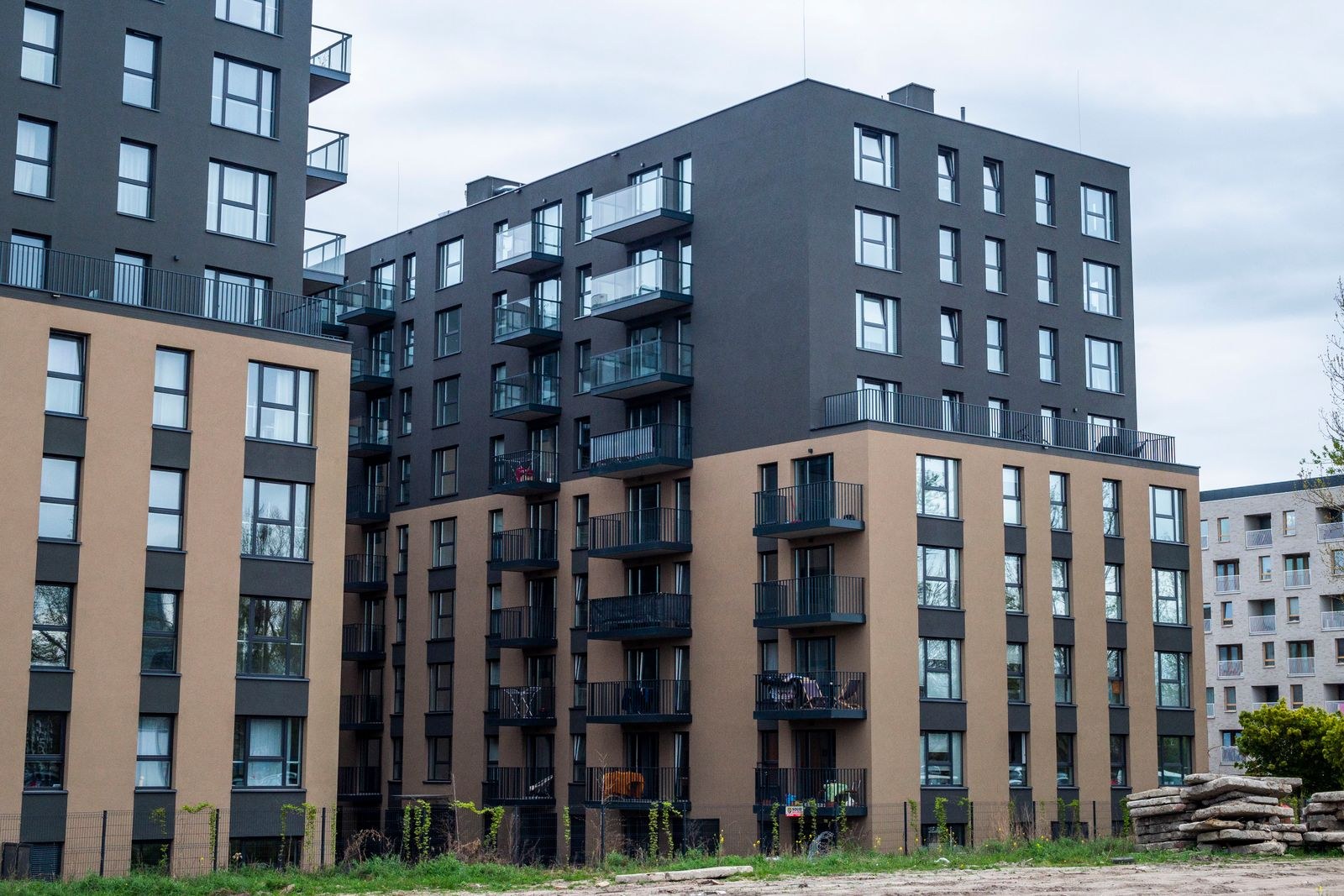
A new launch purchase is made before you can inspect the completed home. Good due diligence therefore means replacing assumptions with documents, measurements and site observations—and knowing which questions belong to the developer, bank, lawyer or public authority.
The checklist below is designed for private residential projects sold by licensed developers in Singapore. It deliberately avoids launch-day predictions and instead focuses on facts that can change whether a specific unit is affordable and suitable.
2. Bala’s Table and the non-linear curve of lease decay
A common misconception is that a 99-year leasehold condo loses 1% of its value every single year in a straight line. In Singapore real estate practice, lease depreciation follows a distinctly non-linear curve governed by Bala’s Table, a valuation discount schedule maintained by the Singapore Land Authority (SLA) and the Chief Valuer.[1]
According to Bala’s Table, leasehold value remains remarkably resilient in the early decades of a property's lifespan. A brand-new 99-year leasehold plot is valued at approximately 96.0% of an equivalent freehold plot. Even after 39 years have elapsed—leaving 60 years on the lease—the property still theoretically commands 80.0% of freehold value.[1]
The steep acceleration in lease decay ('the cliff') typically occurs when remaining lease dips below 60 years, dropping sharply to 60.0% at 30 years remaining and 38.0% at 15 years remaining. For buyers of brand-new 99-year launches, this mathematical reality means that capital appreciation over the initial 10 to 15 years is overwhelmingly driven by location transformation, economic growth, and supply-demand dynamics rather than structural lease decay.
| Remaining Lease Period | Bala's Table Valuation (% of Freehold) | Depreciation Rate Character |
|---|---|---|
| 99 Years (Brand New) | 96.0% | Negligible structural discount vs freehold |
| 75 Years Remaining | 91.1% | Very slow annual depreciation (~0.2% per year) |
| 60 Years Remaining | 80.0% | Critical institutional milestone for banking eligibility |
| 45 Years Remaining | 72.0% | Secondary market buyer resistance begins |
| 30 Years Remaining | 60.0% | Severe bank loan restrictions and CPF limits apply |
| 15 Years Remaining | 38.0% | Accelerated terminal decay without collective sale |
Checkpoint
- Understand that early leasehold depreciation is slow and does not hinder short-term capital appreciation
- Avoid older leasehold properties with fewer than 60 years remaining unless purchasing for specific cash flow yields
- Inspect the Land Betterment Charge regulations to see how tenure adjustments are valued legally
3. CPF housing rules: The Age 95 framework and Valuation Limit
Financing limitations represent the single biggest structural factor affecting aging leasehold properties. The Central Provident Fund Board (CPFB) enforces strict rules governing how Ordinary Account (OA) savings can be utilized for leasehold housing purchases:[3]
Under the Age 95 framework, if the remaining lease of the property covers the youngest buyer to at least age 95, the purchasers can utilize their CPF OA savings up to 100% of the Valuation Limit (VL). If the remaining lease DOES NOT cover the youngest buyer to age 95, the maximum allowable CPF usage is pro-rated according to the ratio of the remaining lease to the duration required to reach age 95.
Furthermore, CPFB imposes a hard statutory floor: no CPF savings can be used to purchase a property if its remaining lease is less than 20 years. Because freehold properties possess an infinite leasehold horizon, they are entirely exempt from the Age 95 calculation, allowing buyers of any age to utilize full CPF allocations up to the prevailing Valuation Limit.
Checkpoint
- Verify that the remaining lease plus the youngest buyer's current age equals at least 95 years
- Use CPFB's online housing usage calculator to verify whether your CPF OA usage will be pro-rated
- Understand that CPF usage restrictions reduce the pool of prospective second-hand buyers as the property ages
4. Bank loan tenure, LTV caps, and secondary exit liquidity
Commercial banks regulated by the Monetary Authority of Singapore (MAS) apply stringent underwriting criteria when financing leasehold real estate.[4] While banks will freely grant a maximum 30-year loan tenure and 75% Loan-to-Value (LTV) limit for freehold properties or new 99-year launches, their risk appetite tightens considerably for older leases.
Most Singapore retail banks require a property to have at least 30 years of remaining lease at the end of the proposed loan tenure. If a 40-year-old buyer purchases a condo with only 50 years of remaining lease, the maximum loan tenure the bank can grant is capped at 20 years (50 minus 30), rather than the standard 25 or 30 years.
A shortened loan tenure forces monthly mortgage repayments significantly higher under MAS Total Debt Servicing Ratio (TDSR) calculations. Inevitably, this shrinks the secondary resale buyer pool to older, cash-rich buyers, dampening exit liquidity for leasehold owners who hold their units past the 30-year mark. Review stamp duty and financing implications alongside our ABSD Singapore guide.
Checkpoint
- Check bank lending policies on remaining lease requirements before committing to older resale condominiums
- Calculate the monthly mortgage impact if loan tenure is compressed from 30 years to 15 or 20 years
- Factor in exit liquidity: how easy will it be to sell the unit to future 30- to 40-year-old buyers in 15 years' time?
5. The en bloc collective sale: Freehold advantage vs lease top-up costs
Many buyers purchase aging 99-year leasehold condos operating under the hope of an eventual en bloc windfall. While successful collective sales do occur across both tenures, the financial mechanics heavily favor freehold land.
Under Section 84A of the Land Titles (Strata) Act, developments aged 10 years or older require an 80% consensus threshold by share value and strata area to initiate a collective sale tender.[5] However, when a developer acquires an aging 99-year leasehold site, they must pay a substantial Land Betterment Charge (LBC) to SLA to 'top up' or refresh the lease back to a fresh 99-year tenure.[2]
This multi-million dollar lease top-up premium directly reduces the reserve price developers are willing to offer leasehold owners. Conversely, freehold sites require zero lease top-up payments, allowing the full development land value to flow directly to subsidiary proprietors. Consequently, freehold en bloc attempts enjoy substantially higher success rates and command stronger bidding interest from developers during collective sale cycles.
Checkpoint
- Never base an investment purchase solely on speculative en bloc potential
- Understand that leasehold en bloc proceeds are severely diluted by statutory lease top-up charges paid to the state
- Verify whether the development has secured in-principle planning permissions or historical en bloc attempts
6. Practical buyer framework: Aligning tenure with holding horizon
Deciding between freehold and 99-year leasehold is not a question of which tenure is objectively superior; it is a question of matching property characteristics to your household's investment horizon, capital liquidity, and lifestyle requirements:
When 99-Year Leasehold Makes Strong Strategic Sense:
• Holding Horizon of 5 to 15 Years: If your intention is to own the unit through its initial appreciation phase (construction through 5 to 10 years post-TOP), lease decay is negligible, and lower entry pricing maximizes return on invested capital.
• Higher Cash-on-Cash Rental Yields: Investors prioritizing monthly rental cash flow achieve better net returns on leasehold units due to the smaller capital denominator.
• Upgraders and Young Families: Buying a modern leasehold project like Lucerne Grand, Thomson Reserve, or Vela Bay provides access to extensive modern lifestyle facilities and larger living layouts at accessible quantum levels.
When Freehold is the Superior Choice:
• Multi-Generational Wealth Preservation: If the property is intended to remain in the family across multiple decades without fear of lease expiration or terminal depreciation.
• Prime Central Boutique Living: In prestigious core districts where land scarcity is paramount, boutique freehold residences like Dunearn House, Duet@Emily, Amberwood at Holland, and The Serra Residences offer exclusive, enduring real estate value.
• Risk-Averse Long-Term Holding: Eliminates all exposure to CPF Age 95 proration and bank loan tenure compression.
For additional buyer guidance, consult our New Launch Due Diligence Checklist and evaluate financial timelines with our Progressive Payment Scheme guide.
Checkpoint
- Stress-test your expected holding period against the Bala's Table decay curve
- Compare total capital outlays including Buyer's Stamp Duty and financing costs
- Balance lifestyle preferences: larger facilities in leasehold mega-developments vs exclusivity in freehold enclaves