
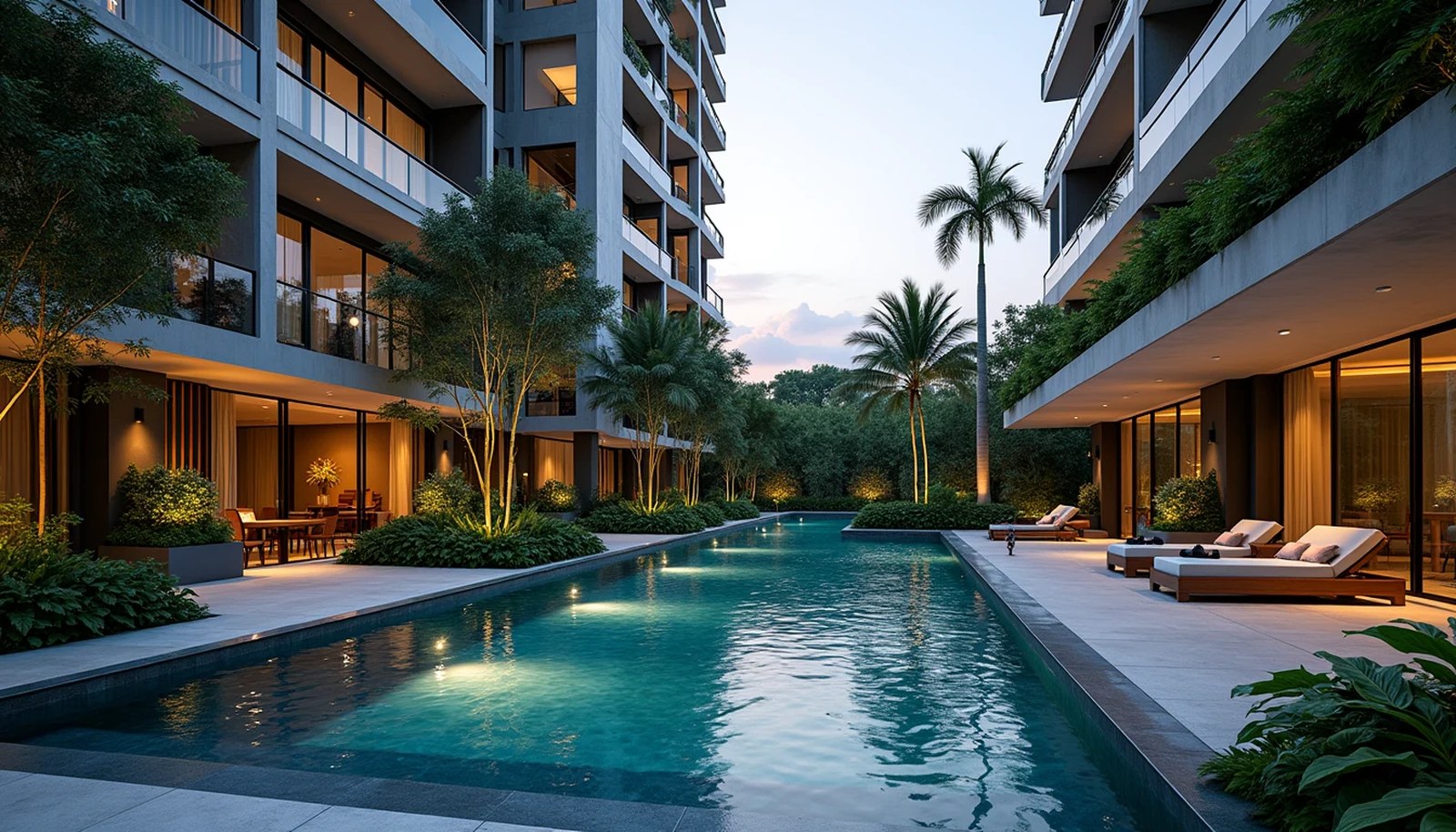
Executive Condominiums (ECs) occupy a unique and advantageous position in Singapore’s residential property landscape. Conceived as a hybrid public-private housing typology by the Housing & Development Board (HDB) and Ministry of National Development (MND), an EC offers the lifestyle, architecture, and luxury facilities of a private condominium at an initial price discount of approximately 20% to 30% compared to equivalent mass-market private launches.
However, that initial price subsidy comes with strict statutory conditions under the Executive Condominium Housing Scheme Act. Buyers must navigate specific HDB citizenship schemes, a $16,000 monthly household income ceiling, a 30% Mortgage Servicing Ratio (MSR) cap on commercial bank mortgages, and a mandatory 5-year Minimum Occupation Period (MOP) before the development can be sold on the open market.
This guide breaks down the legal eligibility framework, mortgage borrowing calculations, CPF housing grants, second-timer resale levies, and step-by-step due diligence required when evaluating modern EC launches in Singapore.
1. The Executive Condominium Framework: Hybrid Public-Private Housing
Introduced under the Executive Condominium Housing Scheme Act 1996, Executive Condominiums (ECs) were created to meet the aspirations of middle-income Singaporeans—often referred to as the “sandwich class”—whose combined household incomes surpass the ceiling for new HDB Build-To-Order (BTO) flats, yet find newly launched private condominiums financially demanding.
ECs are designed, constructed, and marketed by private property developers. They feature the same gated security, communal clubhouses, 50-metre lap pools, modern fitness centres, tennis courts, and underground car parks characteristic of benchmark private condominiums. Examples of contemporary developments reflecting this standard include Solano Grand EC and Wynwood Grand EC.
The fundamental difference lies in regulatory governance: for the first 10 years following completion, an EC is subject to HDB public housing rules under the Housing & Development Act. After 10 years, it converts into full private strata-titled property under the Land Titles (Strata) Act.
2. HDB Eligibility Schemes and the $16,000 Household Income Ceiling
To purchase a new launch EC directly from a property developer, applicants must qualify under one of four designated HDB eligibility schemes. Crucially, at least one core applicant must be a Singapore Citizen (SC), and the co-applicant must be either an SC or a Singapore Permanent Resident (SPR).
The four approved HDB schemes are:
1. Public Scheme: Requires the main SC applicant to apply with a spouse and children (if any), parents and siblings, or children under legal custody (for widowed or divorced applicants).
2. Fiancé/Fiancée Scheme: An SC applicant and an SC or SPR partner apply together. The couple must register and solemnize their marriage with the Registry of Marriages (ROM) prior to taking physical possession of the keys upon Temporary Occupation Permit (TOP).
3. Orphans Scheme: An unmarried SC applicant applies with unmarried siblings (at least one must be SC or SPR), provided both parents are deceased and at least one deceased parent was a Singapore Citizen or Permanent Resident.
4. Joint Singles Scheme: Up to four single Singapore Citizens (all must be SCs, unmarried or divorced, and at least 35 years of age) may pool their eligibility to purchase a new launch EC directly from the developer. Note that single individuals cannot purchase a new EC alone under the Single Singapore Citizen (SSC) scheme.
Household Income Ceiling: The combined gross monthly household income of all applicants and essential occupiers cannot exceed $16,000. This figure is computed across fixed monthly basic salaries, guaranteed allowances, and the preceding 12-month rolling average of variable allowances, commissions, and bonuses.
30-Month Private Property Ownership Rule: Any applicant or essential occupier who currently owns, or has disposed of, any private residential property (locally or overseas) within the preceding 30 months is strictly disqualified from applying for a new launch EC.
3. Financing an EC: 30% MSR Cap, 55% TDSR and 75% LTV Bank Loans
Financing a new launch EC differs fundamentally from financing a standard private condominium. The most critical distinction is that HDB concessionary housing loans are not available for ECs; buyers must secure commercial bank mortgage financing.
Furthermore, under Monetary Authority of Singapore (MAS) and HDB macroprudential rules, bank loans for ECs bought directly from developers are capped by the Mortgage Servicing Ratio (MSR). MSR mandates that monthly mortgage installments must not exceed 30% of the household’s gross monthly income.
While private condominium purchasers are evaluated solely against the 55% Total Debt Servicing Ratio (TDSR), EC purchasers must pass both the 30% MSR hurdle for the property loan and the 55% TDSR hurdle across all combined liabilities (including car loans, student loans, and credit facilities). For a household earning the ceiling of $16,000 per month, the maximum permitted monthly mortgage installment under 30% MSR is exactly $4,800.
When assessing loan quantum, commercial banks are required by MAS to apply a medium-term stress interest rate (standardly 4.0% p.a.). This stress rate often restricts the maximum borrowing quantum for an EC below the conventional 75% Loan-to-Value (LTV) limit, requiring buyers to bridge any shortfall with higher upfront cash or CPF Ordinary Account (OA) savings.
Under the standard 75% LTV limit, the minimum downpayment is 25%, structured as a mandatory 5% cash booking fee and 20% in cash or CPF OA upon exercising the Option to Purchase. Readers should review our detailed Progressive Payment Scheme guide to understand milestone cash disbursements.
4. CPF Housing Grants for First-Timers and Resale Levy for Second-Timers
First-timer Singapore Citizen households purchasing a new launch EC may qualify for the CPF Housing Grant for Executive Condominiums of up to $30,000, subject to household income limits.
The grant is disbursed directly into the applicants’ CPF Ordinary Accounts upon loan disbursement. It can be applied toward the purchase price, reducing the overall mortgage required, but cannot be utilized to satisfy the initial 5% cash option fee.
In contrast, second-timer buyers—applicants who have previously owned a subsidised HDB flat (BTO, DBSS, or subsidised EC) or received a housing grant—are required to pay an HDB Resale Levy in cash upon taking possession of their new EC.
Importantly, existing HDB flat owners purchasing a new launch EC enjoy an automatic exemption from paying upfront Additional Buyer’s Stamp Duty (ABSD), provided the unit is bought under an eligible SC couple structure and the existing HDB flat is legally sold within 6 months of obtaining the EC’s Temporary Occupation Permit (TOP).
| Household Monthly Income | SC / SC Family Grant | SC / SPR Family Grant | Second-Timer Resale Levy |
|---|---|---|---|
| Up to $10,000 | $30,000 | $15,000 | 2-Room Flat: $15,000 |
| $10,001 to $11,000 | $20,000 | $10,000 | 3-Room Flat: $30,000 |
| $11,001 to $12,000 | $10,000 | $5,000 | 4-Room Flat: $40,000 |
| $12,001 to $16,000 | Nil ($0) | Nil ($0) | 5-Room: $45,000 / Exec: $50,000 |
5. Progressive Payment Scheme vs Deferred Payment Scheme (DPS)
When purchasing an uncompleted EC from a developer, buyers are generally offered two distinct payment methods: the Normal Progressive Payment Scheme (NPS) and the Deferred Payment Scheme (DPS).
Under the Progressive Payment Scheme, mortgage drawdowns occur progressively as construction milestones are completed and certified by the project architect (e.g., foundation, concrete structure, brick walls, roofing, finishes). This structure minimizes borrowing costs during the construction phase because interest is calculated only on the disbursed loan balance.
Under the Deferred Payment Scheme (DPS), buyers pay the 20% downpayment (5% cash booking fee + 15% cash/CPF upon signing the S&P agreement), along with Buyer’s Stamp Duty (BSD). All remaining payments (65% loan disbursement and 15% final completion) are deferred entirely until the development obtains its Temporary Occupation Permit (TOP).
DPS is exceptionally attractive to existing HDB flat owners who must continue servicing their existing HDB mortgage, as it prevents the heavy cash-flow burden of dual monthly mortgage payments during the 3-year construction timeframe.
However, developers universally charge a premium for the DPS option—typically between 2% and 3% on the purchase price. Buyers must evaluate whether their potential mortgage interest savings and cash-flow flexibility justify this additional capital cost.
6. 5-Year MOP, Partial Privatization and Full 10-Year Privatization
The primary financial catalyst for Executive Condominiums is the staged regulatory transition from public housing asset to fully privatised real estate over a 10-year timeline:
Years 1 to 5 (Construction to TOP): The property cannot be sold or assigned. Buyers who own an existing HDB flat must dispose of it within 6 months of obtaining TOP.
Years 6 to 10 (5-Year Minimum Occupation Period): Upon physical completion (TOP), the mandatory 5-year MOP begins. During this 5-year window, the owner must physically occupy the unit. Renting out the entire apartment is strictly prohibited, though individual bedrooms may be leased with HDB registration. The unit cannot be sold on the open market.
Years 6 to 10 (Semi-Privatised Status): Once the 5-year MOP is completed, the EC can be sold on the open secondary market, but only to Singapore Citizens and Singapore Permanent Residents. The entire unit can also be freely rented out without HDB approval.
Year 11 Onwards (Full Privatisation): Exactly 10 years from the date of TOP, the EC becomes fully privatised under the Land Titles (Strata) Act. Foreign individual buyers and corporate entities become eligible to purchase, eliminating all remaining HDB restrictions and aligning the asset’s market liquidity with private condominiums.
7. Step-by-Step EC Application Due Diligence and HDB Verification
Purchasing an Executive Condominium involves statutory compliance steps that differ from private condo launches. Because booking an EC without meeting eligibility rules results in the forfeiture of 25% of the booking fee, careful advance verification is mandatory.
Buyers should secure a bank In-Principle Approval (IPA) factoring in the 30% MSR restriction well before launch day, ensuring their borrowing capacity matches their target unit size and price range.
Checkpoint
- Confirm all applicants meet HDB citizenship requirements (at least 1 SC applicant + 1 SC/SPR co-applicant)
- Calculate gross combined household income across preceding 12 months to verify compliance with the $16,000 ceiling
- Verify that no applicant or essential occupier has owned or disposed of private property within the last 30 months
- Obtain a formal bank In-Principle Approval (IPA) incorporating the 30% MSR cap and MAS 4.0% stress interest rate
- Confirm whether an HDB Resale Levy applies ($15,000 to $50,000) and ensure sufficient liquid cash reserves
- Prepare 5% cash for the booking fee plus 15% cash/CPF Ordinary Account funds for the S&P exercise
- Weigh the cash-flow benefits of the Deferred Payment Scheme (DPS) against the developer’s 2% to 3% price premium
- Check home-to-school distance on SLA OneMap to understand primary school priority zones before finalizing unit choice